
AC Not Cooling on a Humid Chicago Summer Day

When your central air conditioner runs continuously but blows warm or room-temperature air on a humid Illinois summer day, check for a frozen indoor evaporator coil behind a clogged filter, inspect the outdoor condensing unit for cottonwood and grass clogs, ensure the thermostat fan is set to "AUTO" rather than "ON," and check if the dual run capacitor has failed from heat exhaustion.
During July and August in Hinsdale, temperatures regularly surge into the 90s accompanied by heavy humidity rolling off Lake Michigan and the Midwest plains. When your central air conditioning unit works under these demanding conditions, even a minor mechanical bottleneck can cause the entire cooling cycle to collapse. Homeowners often return home to find the AC running incessantly while indoor temperatures climb into the 80s. Here is how to diagnose what is happening and take safe corrective steps.
Call our Hinsdale dispatch line to connect with an independent heating or cooling contractor serving your west suburb today.
Check 1: Thermostat Fan Setting (AUTO vs. ON)
Check your thermostat display. If the fan setting is set to "ON" rather than "AUTO," the indoor blower fan will run 24 hours a day, even when the outdoor compressor has shut down. During compressor off-cycles, the fan blows warm air across the wet evaporator coil, evaporating moisture right back into your home and creating a hot, humid atmosphere. Always keep the fan switch on "AUTO."
Check 2: The Cottonwood Factor on Outdoor Condenser Fins
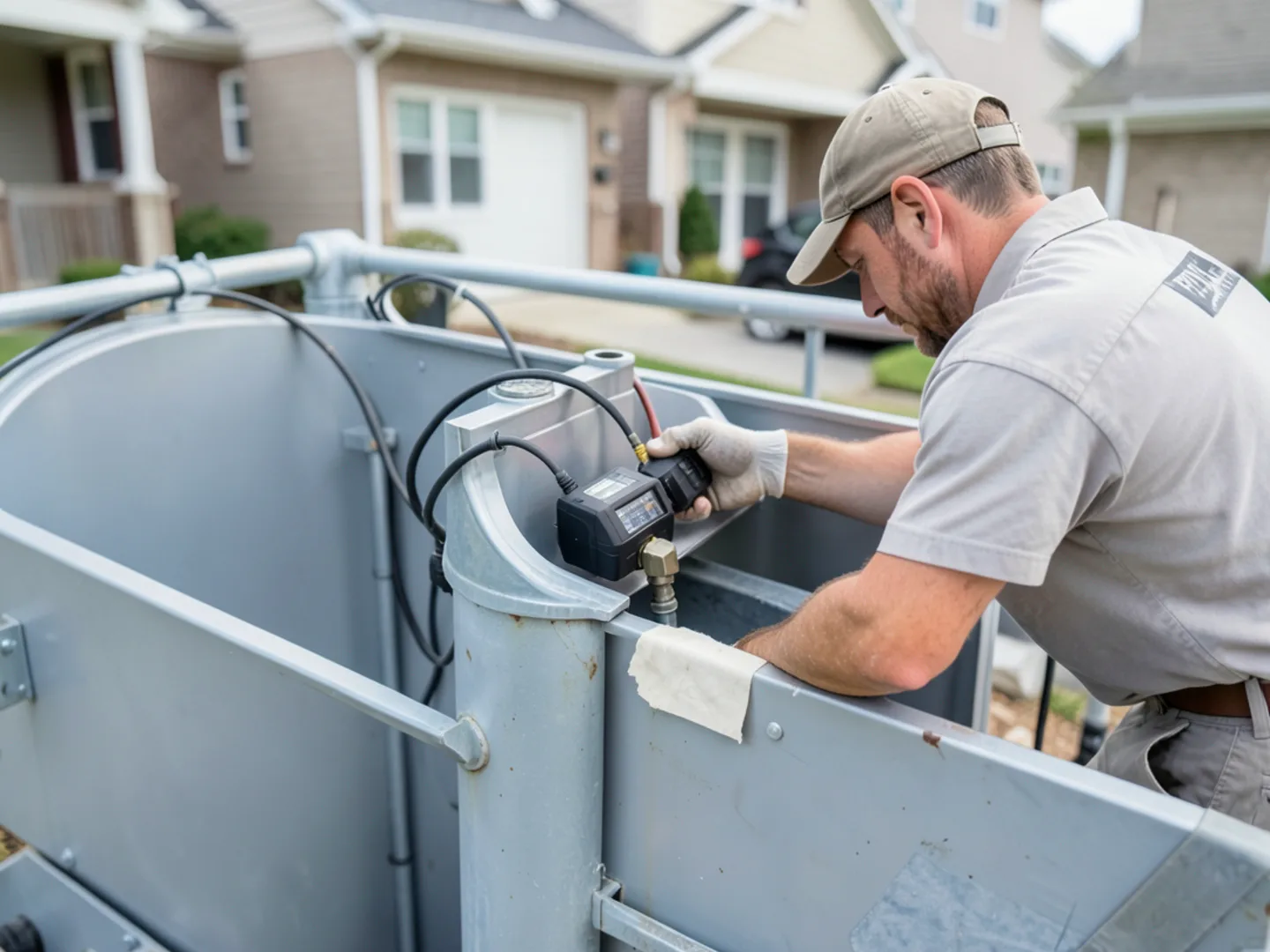
The Chicago west suburbs are home to dense forest preserves and mature river valleys filled with cottonwood trees. In late spring and early summer, cottonwood fluff and mower grass clippings blanket outdoor AC coils like a thick felt blanket. This blocks air from flowing across the aluminum fins, preventing the refrigerant from shedding heat. High head pressures spike, thermal overload switches trip the compressor, and the unit stops cooling. Gently washing the coil with low-pressure water restores heat transfer.
Check 3: Frozen Indoor Evaporator Coils
Look at the copper refrigerant pipe entering your indoor furnace or air handler cabinet. If the larger insulated copper pipe is encrusted in white frost or solid ice, the indoor evaporator coil is frozen solid into a block of ice. Ice acts as an insulator, blocking all airflow through your registers. Shut the AC off at the thermostat immediately and switch the fan to "ON" to thaw the coil without burning out the compressor.
- ✓Why coils freeze: 90% of frozen coils are caused by restricted airflow from a severely clogged air filter or closed supply registers.
- ✓Refrigerant leaks: The remaining 10% are caused by low refrigerant charge, which drops coil evaporating temperatures below 32°F.
- ✓Never chip at ice: Never use screwdrivers or knives to chip ice off delicate aluminum coil fins; allow it to thaw naturally into the drain pan.
Check 4: Failed Run Capacitor from Heat Stress
The single most common electrical failure in residential cooling is a blown dual run capacitor inside the outdoor condenser. Capacitors provide the initial electrical jolt and continuous phase shift needed to spin the compressor and outdoor fan. Under sustained 90°F+ heat waves, internal capacitor temperatures can exceed 150°F, causing internal dielectric fluid to boil and bulge the top of the metal can. If your outdoor fan motor hums loudly without turning, the capacitor has failed.
Diagnostic Table: Cooling Symptoms vs. Real Causes
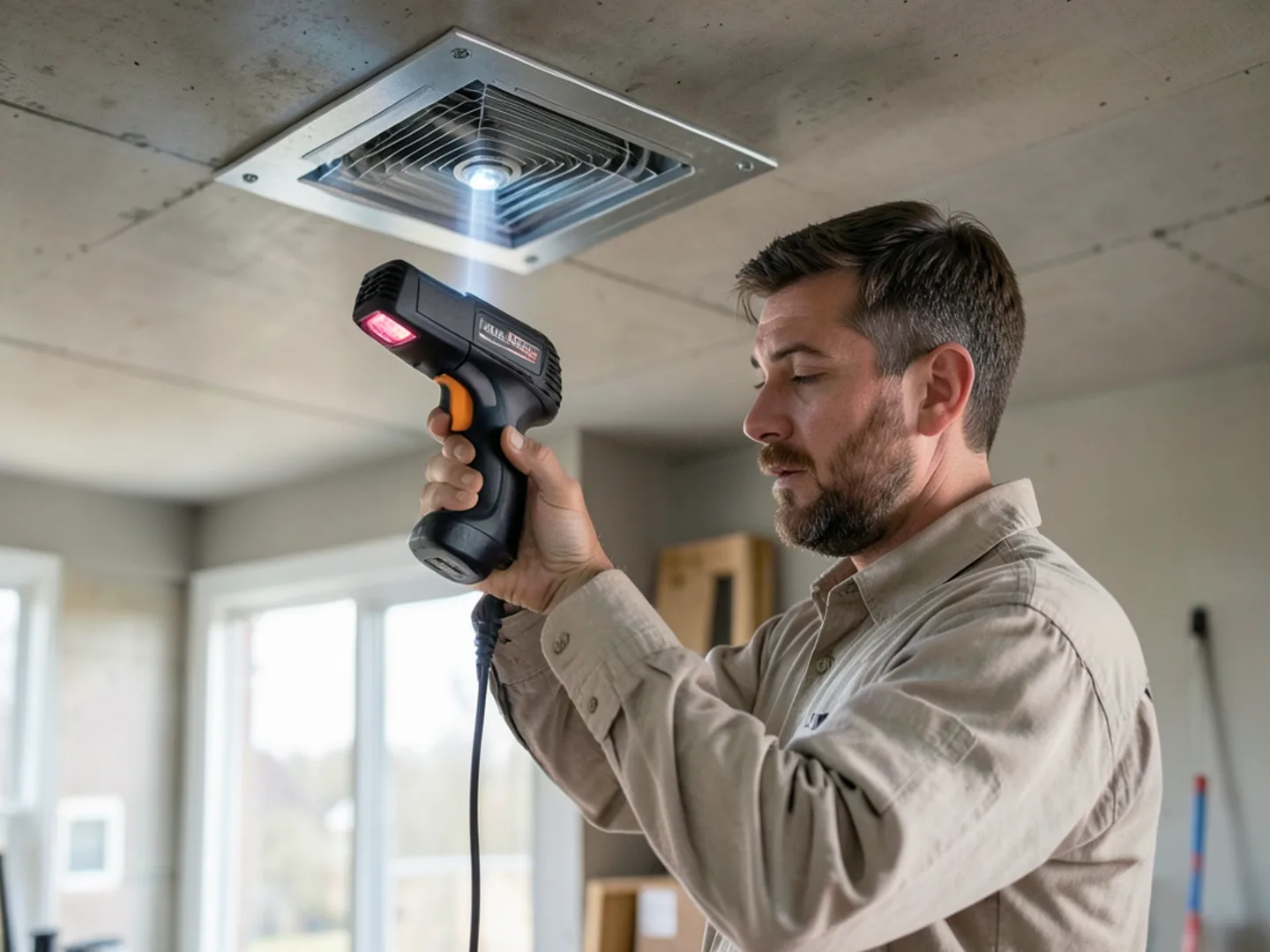
Use this quick diagnostic reference to understand what your cooling symptoms mean before calling a technician. In addition to visual symptoms, homeowners can verify system performance by measuring the Delta T temperature split: compare the return air temperature with the supply air leaving your closest register after 15 minutes of operation. A healthy cooling system creates a 16°F to 20°F drop. A split under 12°F indicates low refrigerant or poor airflow:
| Observed Cooling Symptom | Probable Mechanical Cause | Immediate Action |
|---|---|---|
| AC runs, air is warm, outdoor fan still | Failed capacitor or burned fan motor | Shut off AC; schedule capacitor check |
| Frost or ice on copper suction line | Clogged filter or low refrigerant charge | Shut off system; thaw coil; check filter |
| Outdoor unit humming loudly, no fan spin | Seized compressor or bad start capacitor | Turn off breaker to protect compressor |
| Water leaking around basement furnace base | Clogged condensate drain line / P-trap | Clear drain line; check float switch |
| AC cycles on and off every 3 minutes | Oversized unit or dirty outdoor coil | Clean condenser fins; evaluate sizing |
📚Sources & Technical References
- Air Conditioning Troubleshooting Guide— Refrigerant pressure diagnostics and capacitor tolerancesAir Conditioning, Heating, and Refrigeration Institute (AHRI)
- Residential Cooling System Maintenance— Filter maintenance and condenser coil cleaning guidanceU.S. Department of Energy (DOE Energy Saver)
- EPA Section 608 Refrigerant Regulations— Leak repair requirements and atmospheric venting bansU.S. Environmental Protection Agency
Frequently Asked Questions
A frozen evaporator coil typically takes 2 to 6 hours to completely melt, depending on indoor temperature and ice thickness. Switching the thermostat fan to "ON" with cooling set to "OFF" circulates room air across the coil to accelerate thawing.
Published by the Quality Heat and Air dispatch desk in Hinsdale, IL. Content is compiled from field diagnostics across Cook and DuPage counties, adhering to ACCA Manual J/S/D sizing criteria, Nicor Gas and ComEd energy efficiency guidelines, and local municipal mechanical codes.